
Message Gateway

Message Gateway

The PriMega Message Gateway is the central management point of a system. All calls, messages, alarms, and notifications are processed by the PriMega and logged for usage and diagnostic reports. The PriMega manages a paging network from the message input using telephone and data lines to the data output to one or more paging transmitters, email or text messaging destinations.

The PriMega is a modular design allowing you to choose which paging and message handling functions you need. Features include direct VoIP telephone access for the ultimate in commercial and private Radio Paging systems. Using network-based direct calling to the “SIP” enabled PriMega reduces telephone interface costs and provides calling from virtually anywhere using VoIP.

The PriMega allows companies using a VoIP capable PBX to bypass the PSTN giving your users virtual access. Connect medical and industrial remote monitoring equipment using TAP, TNPP and plain text data to the PriMega using Prism Inet, the new IP interface for industry-standard message input protocols. With built-in IVR/Voicemail, text messaging to pagers and phones, email copy of messages and all the popular paging signaling formats make the PriMega the ultimate for centralized messaging.

The PriMega is designed to accept text messages using various protocols such as TNPP, Email (SMTP), SNPP and Computer Interface (CIF) connections over Ethernet and serial ports. Messages are routed out according to instructions in the User Database. The messages can be sent as Numeric (digits only) and Alphanumeric (text message) to your own paging transmitters or to other paging networks. Messages can also be sent to Email addresses or SMTP destinations for display on cell phones or Wi-Fi phones.

Features

The PriMega System Design

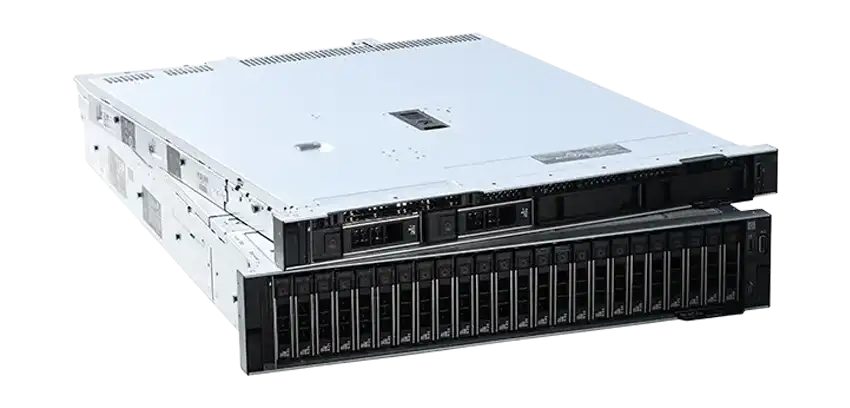
  • Runs on modern commercial computer server platforms designed for professional computer applications.
  • Prism Operating System is designed for message management systems requiring high-reliability and efficient performance.
  • RAID hard disk drives protect against system failure.
  • Software functions are performed in a multitasking, multi-threaded operating system environment using one or more multi-core CPUs.
  • Windows Operating System provides the routine data clocking and communications functions between software modules.
  • Provides a familiar User Interface and network connectivity for TCP/IP and Ethernet.
  • Ethernet network also provides remote access for subscriber programming and maintenance support.

VoIP SIP Interface

  • VoIP SIP software supports direct VoIP calls from public or private VoIP service providers.
  • Using 3rd party SIP trunking can replace expensive telephone circuits and expand the calling area to remote campuses without long distance charges.
  • Provides direct low-cost connection between the VoIP capable PBX’s.
  • Convert existing Analog trunks, POTS lines, T1 or E1 digital circuits to VoIP/SIP with the Prism SIP Gateway.
  • Voice paging and voice mail calls with pager notification.
  • Calls to the paging system for numeric message input using telephone lines.
  • IVR stores voice messages that are received over the telephone circuits for specific system users.

Database Module

  • Database supports from 100 to over 1 million users based on the type of message input.
  • User numbers may be from 1 to 10 digits in length and are expandable for special or international applications.
  • Database Manager allows searches for any or all records, any or all fields, and prints the results to a file.
  • Optional redundant systems with automatic synchronization of the user database and voicemail messages.
  • Reports and logs are exportable and formatted for use with most popular text editors and database programs.
  • Provides telephone call statistics, software and hardware alarm reports, encoder output statistics, and network traffic statistics.
  • System usage totals for each Subscriber record including Calls, Hold Time, Pages Sent, Characters Sent, and Over-dial Access Call Counts.

Input – Output Router Module

PriMega systems perform universal message handling utilizing powerful protocol conversion and message routing functions. By connecting external data sources and destinations, the PriMega links private and commercial messaging services.

PriMega systems can be configured to accept text messaging data using the following protocols as well as send messages out using these protocols.

  • GCP – input and output
  • TAP – input and output
  • TNPP – input and output
  • SMS – output to cellular carriers and SMS aggregators
  • SNPP – input and output
  • SNPP/SLL – input and output
  • HTTP – input and output
  • HTTPS – input and output
  • SMPP – Client and Server
  • WCTP – Client and Server
  • WCTP – Secure Server Input
  • WCTPS (SSL) – input and output
  • SMTP – input and output
  • Anti-Spam – for email
  • Data Throttling – controls I/O to balance resource availability
  • Multiple paging protocols
  • VoIP SIP numeric message input with prompts

Encoder Module

Prism encoders provide maximum efficiency and message throughput while mixing almost any formats on the same channel. Encoders support up to 8 channels plus zones. The encoder is paired with the ipBSC for transmitter control of more than 1,000 transmitters per channel.

  • Supports both Numeric and Alphanumeric pager types.
  • Sends paging signals to one or more transmitters or wireless networks.
  • Supports voice paging using 2 Tone, 5/6 Tone and Golay pagers.
  • Supports FLEX, POCSAG and Golay paging formats and can mix them on the same channels.
  • Text message delivery to wireless phones such as cell phones and DECT phones.
  • Control remote access devices for entry control and remote security cameras.
  • Generates control data for signaling electronic devices on electric power grid load management systems.
  • Integrated Internet/Intranet network messaging for Email (SMTP), SNPP and Web Page (HTTP) protocols.
  • Messages received from the Ethernet network can be sent to pagers or to other networked systems using SMTP or SNPP.

Dispatcher Server

The Dispatcher software module performs a one-to-many data management function. It receives paging data from the encoder and sends the data to all “In Service” base stations on the paging channel.

Encoded messages are sent in UDP packets as Broadcast or Unicast on the customer network.

Dispatcher sends a confirmation to the Page NoLoss server when an encoded packet is sent to ipBSCv2 devices for possible retransmission if packets are missing during a switch between computing planes in a redundant system.

Dispatcher tracks ACKs, NAKs, and no responses from base station controllers for each FLEX batch and sends a copy of each batch to the Dispatcher Archive PostgreSQL database for decoding and message logging.

No-Loss Page Server

The Linux-based virtual server prevents loss of pages during automatic switching between primary and backup systems. The Page NoLoss server accepts messages from the PriMega message processor and sends them to the Encoder module for dispatch to transmitters.

When PriMega processing switches between planes (for example during a failure or maintenance), the NoLoss server sends out any messages that were not transmitted. This ensures messages are not lost during system transitions.

Operations Management

The Operations and Management Interface (OMI) manages system components and data flowing through the system. OMI logs required data and provides site monitoring and alarm processing.

The OMI module performs operations and management of PriMega system components including the central paging system, base station controllers and paging transmitters.

  • Web-based configuration and monitoring system for ipBSCv2 and STI Transmitter.
  • Place ipBSCv2 units in or out of service.
  • Updates Dispatcher with IP addresses for receiving encoded paging data packets.
  • Actively interrogates ipBSCv2 and STI Transmitter for device status.
  • Monitors alarms and sends SNMP traps for alarms and clears.
  • Updates ipBSCv2 and STI Transmitter firmware.